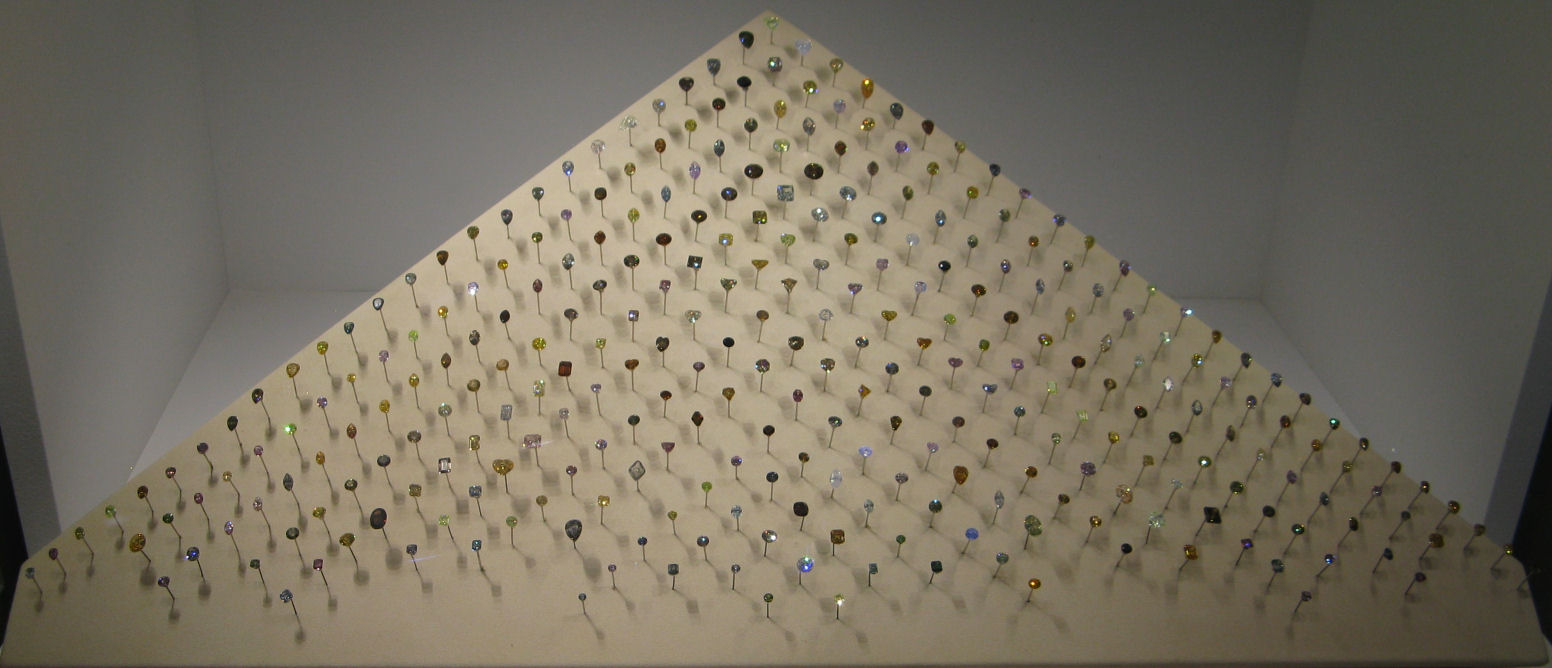
Fancy Color Diamonds: What Actually Drives Price (and Where Lab-Grown Wrecks Resale)
How are fancy color diamonds valued and sold? Value is set by three GIA-graded axes — hue, tone, and saturation — laddered from Faint through Fancy Vivid, with named-lab reports (GIA for diamonds; AGL for colored stones) attesting natural vs. treated origin. Selling channels track tier: private dealers under $50k/ct, Christie's and Sotheby's auctions above.
A 0.50-carat fancy vivid blue can clear more at auction than a 5-carat colorless D-flawless. Same mineral, two orders of magnitude apart in per-carat price — and the entire gap is color. That inversion is the thing to understand before you spend on this category, because almost everything written about fancy color diamonds is produced by people selling them, and the marketing systematically obscures where the money actually goes and where it evaporates.
This is a market where a grading report's wording is worth tens of thousands of dollars, where two stones that look identical to your eye can differ 3x in price, and where the lab-grown disruption that gutted colorless prices behaves very differently across colors. Let's take it apart.
Colored diamond value in 2026 — hue, saturation, and origin
In colorless diamonds, color is a defect you pay to avoid — the D-to-Z scale runs from "no color" (premium) down to faintly yellow or brown (discount). Fancy color diamonds are graded on a separate scale entirely. Once a yellow stone saturates past "Z," or any other body color appears, GIA moves it onto the fancy-color system, where more color means more money, not less.
GIA grades fancy color along three axes, and you need all three to read a price:
- Hue — the base color (yellow, brown, gray, blue, pink, green, orange, red, plus modifiers like "orangy pink" or "greenish blue"). The first word is the dominant hue; words before it are modifiers.
- Tone — how light or dark, on a relative scale.
- Saturation — strength of color, which drives the grade ladder: Faint, Very Light, Light, Fancy Light, Fancy, Fancy Intense, Fancy Dark, Fancy Deep, Fancy Vivid.
Fancy Vivid and Fancy Deep sit at the top. The jump from Fancy Intense to Fancy Vivid on a blue or pink can roughly double the per-carat price for the same stone. This is why the grading lab matters more here than anywhere else in diamonds — GIA is the reference standard for colored-diamond reports, and a stone that reads "Fancy Intense" at GIA but "Fancy Vivid" at a softer lab is being repriced by paperwork, not by nature. Demand the GIA report. For colored stones that aren't diamond, the equivalent authorities are SSEF, Gübelin, GRS, and AGL; for diamonds specifically, treat GIA as the spine and AGS (now folded into GIA) as historical context.
Two more axes that don't appear as headline grades but move price hard:
- Color origin. GIA states whether color is natural or treated. Irradiated and HPHT-treated natural diamonds exist and are disclosed — they trade at a fraction of untreated natural color. A "treated" notation is not fraud; it's a different, far cheaper product. Read the origin line before the carat weight.
- Color distribution and "no overtone." Even, face-up color with no secondary modifier (a plain "Fancy Vivid Yellow," not "Fancy Vivid Brownish Yellow") commands the premium. Modifiers usually discount — with deliberate exceptions like "orangy pink" that the trade prizes.
Per-Tier Valuation: What Each Grade Sells For, With Named Comparables
Price tracks geological scarcity, and scarcity is wildly uneven across hues. Rough order, cheapest to most expensive per carat at equivalent saturation:
Brown and yellow are the most abundant fancy colors. Gray is inexpensive. Yellow has a real, deep market (more below). Then a steep climb through orange and green (true, untreated, natural-color green is genuinely scarce — the radiation that causes it rarely leaves an unambiguous natural signature, so labs are cautious and good ones are thin on the ground). At the top: blue, pink, and red, with red the rarest fancy color in existence — the global population of pure Fancy Red diamonds is counted in the low hundreds.
Per-tier ranges below combine dealer sheets (Rapaport Colored Diamond, IDEX) with realized auction prices across yellow, pink, and blue. Every row is untreated natural color, eye-clean, ~1 ct unless noted, and cited by named source — but treat every number as "roughly," because color stones price stone-by-stone, not off a grid:
| Grade tier | Rough natural per-carat range | Named comparables |
|---|---|---|
| Fancy Yellow, ~1 ct | $3k–$8k dealer | Rapaport Colored Diamond dealer sheet; small-stone auction pass-through |
| Fancy Vivid Yellow, ~1 ct | $8k–$25k dealer; six-figure/ct at large auction size | Sotheby's Graff Vivid Yellow (100.09 ct, Geneva 2014, ~$163k/ct); Sotheby's Sun-Drop (110.03 ct, Geneva 2011) |
| Fancy Intense Pink, ~1 ct | $50k–$150k+ | Argyle Pink Diamonds Tender realizations 2018–20; dealer sheet |
| Fancy Vivid Pink, ~1 ct | $150k–$800k+ dealer; multi-million/ct at auction | Sotheby's CTF Pink Star (59.60 ct, Hong Kong 2017, ~$1.19M/ct); Sotheby's Williamson Pink Star (11.15 ct, Hong Kong 2022, ~$5.15M/ct) |
| Fancy Intense Blue, ~1 ct | $200k–$500k+ | Dealer sheet; Phillips and Bonhams secondary realizations 2022–24 |
| Fancy Vivid Blue, ~1 ct | $500k–$3M+/ct at auction | Christie's Oppenheimer Blue precedent (Geneva 2016, 14.62 ct, ~$3.9M/ct); Sotheby's Vivid Blue sales 2022–24 |
| Fancy Red, any size | $1M+/ct realized, auction-only | Argyle Pink Diamonds Tender Fancy Red realizations (e.g. Argyle Everglow, 2.11 ct, 2017) |
The spread inside each row is enormous because hue purity, distribution, and exact saturation move price more than the grade label alone. The Argyle mine in Western Australia — historically the source of most of the world's pink supply — ceased production in 2020. That supply shock is a structural tailwind under natural pink specifically, and it's the cleanest fundamentals-driven case in the category.
Where Lab-Grown Destroys Value: Blue and Pink
Here is the part the seller will not lead with. Lab-grown diamonds are chemically and optically diamond — and color is the easiest premium for a lab to manufacture. CVD and HPHT processes can produce vivid blue (boron doping) and vivid pink (HPHT + irradiation + annealing, or grown-in defects) on demand, in quantity, in exactly the saturations that are rarest and most expensive in nature.
The result is a brutal price collapse on the lab side, and it has dragged hard on perception of the whole color. A lab-grown Fancy Vivid blue or pink that would cost six figures as a natural stone trades, today, in the low hundreds to low thousands of dollars per carat — and that lab price is still falling, the same way colorless lab-grown has fallen year over year. IGI grades the bulk of lab-grown color and will state "Laboratory-Grown" on the report; GIA reports lab-grown on a distinct report type. The two products are not substitutes for resale purposes. They are different asset classes that happen to look identical.
What this means for your money:
- If you are buying for the object — to wear it, full stop, with zero resale expectation — lab-grown vivid blue or pink delivers the visible color for 1–5% of the natural price. That is a legitimate, eyes-open choice. Say it out loud: you are buying appearance, not the stone's scarcity.
- If anyone frames a lab-grown blue or pink as an investment, "rare," or "an appreciating asset," walk. Manufactured scarcity is not scarcity. The supply curve is a factory.
- Resale on lab-grown color is punishing. Secondary-market bids run a steep discount to an already-falling retail, because the next buyer can get a newer one cheaper. Natural fancy color at the top end has a genuine auction market (Christie's, Sotheby's); lab-grown color does not, and won't.
The trap is that the natural and lab versions are visually indistinguishable to you, to a jeweler's loupe, and often to a standard tester. The only thing separating a $300/ct stone from a $300,000/ct stone is the origin determination on a credible report. This is why, in fancy color, the report isn't paperwork — it's most of the asset.
The Yellow Exception
Yellow breaks the pattern, and it's the one fancy color where a natural stone still makes broad sense for a normal budget.
Natural yellow diamonds are relatively abundant (nitrogen, the most common diamond impurity, is what makes them yellow). That abundance means natural Fancy and Fancy Intense yellows trade at prices a serious buyer can actually reach — roughly $3k–$20k/ct depending on saturation — rather than the six-figure territory of blue and pink. So the natural-vs-lab decision is different in kind:
- The price gap is far narrower. Lab-grown yellow is cheap, but natural yellow isn't expensive enough for the lab discount to be life-changing. You're often comparing a few thousand against a few hundred per carat, not hundreds of thousands against hundreds.
- That makes natural yellow the defensible default. You get genuine natural origin, a deep and liquid resale market, and auction-grade demand at the Vivid end — without the blue/pink premium. The marginal dollars buy real scarcity here, where on blue and pink they're buying scarcity a factory can erase.
- Within yellow, saturation is the lever. The step from Fancy to Fancy Intense to Fancy Vivid is where the money is, and "Fancy Vivid Yellow" with no brownish or greenish modifier is the grade to anchor on. Beware the soft-lab "canary" label with no GIA backing — "canary" is a marketing word, not a grade.
Selling a Fancy Color Diamond: Certification, Auction Channels, and Realized Prices
If you already own a fancy color diamond and want to sell it, the rules invert. The dealer, auction specialist, or private buyer on the other side of the desk reads paperwork before they read the stone, prices against public comparables, and routes the stone to a channel dictated by its grade tier — not by your preference. Get these four decisions right and your net is 20–40% higher than a walk-in sale to a local jeweler.
The report a resale buyer requires
Three documents matter, and each does a specific job:
- GIA Colored Diamond Grading Report — the baseline: hue, tone, saturation, measurements, weight, clarity, and a color-origin statement (natural vs. treated). Any untreated natural fancy color stone worth more than about $10k/ct is uncatalogueable at Christie's, Sotheby's, or Bonhams without one. If your report is more than roughly ten years old, send the stone back to GIA for a current report before consigning; the room re-grades old reports informally and discounts on them.
- GIA Colored Diamond Origin Report — a specialized supplement for stones where geographic or mine origin materially moves price. Argyle pedigree on pink, Type IIa determination on blue, historic Golconda characteristics — this is the document that lets an auction house catalog the pedigree line, and where it applies it moves final price 20–40%.
- AGL Colored Stone Report, or an explicit GIA "Origin of Color" treated designation — the document a serious buyer of an enhanced or treated stone expects, disclosing HPHT treatment, irradiation, or coating. Selling a treated stone as untreated because the paperwork was vague is the fastest route to a consignment being pulled and a dealer relationship ending. Get the treatment disclosure on the report before the stone leaves your safe.
Two mechanics that catch first-time sellers: reports over ten years old get re-graded by the room, and the laser-inscribed report number on the girdle must match the report. If the stone was repolished after its last report — even lightly — the number no longer matches and the report is dead. Both mean a trip back to GIA before consigning.
Auction channels — who takes what, on what timing, at what commission
Three houses make the global market in fancy color diamonds, each running fine-jewelry sales twice a year, with consignment windows closing roughly three months ahead:
- Christie's Magnificent Jewels — Geneva (May, November), New York (April, June, December), Hong Kong (May, November). The reference channel for top-color Fancy Vivid Blue and Fancy Vivid Pink; the house that sold the Oppenheimer Blue in 2016. Seller's commission on jewelry typically runs 10–15% of hammer, negotiable at high consignment value. Reserve is set with the specialist and cannot exceed the low estimate.
- Sotheby's Magnificent Jewels — Geneva (May, November), New York (April, June, December), Hong Kong (April, October). Sold the CTF Pink Star and the Williamson Pink Star. Commission structure parallels Christie's. Sotheby's runs private-treaty sales for consignors who won't risk a Fancy Vivid Pink or Fancy Red to a single-underbidder room — worth asking about at the top of the tier.
- Bonhams London Fine Jewels — London (April, September) plus Knightsbridge sales quarterly. The right channel for Fancy Intense stones and mid-tier Fancy Vivid Yellows in the £30k–£300k band that would get lost as filler lots in a Christie's or Sotheby's cover-lot catalog. Specialist attention is higher because the stone isn't competing with a $10M lead lot. Commission runs slightly lower in the mid-tier band.
Submission is by appointment with a jewelry specialist. Expect four to six weeks from submission to a signed consignment agreement, then eight to twelve weeks to the sale. Insurance while in custody is standard. Unsold lots incur a "bought-in" fee at some houses — read the consignment terms before you sign.
Private treaty vs. auction, by tier
Tier dictates channel:
- Fancy Intense — private treaty through a specialist colored-diamond dealer usually nets more. Auction rooms price Fancy Intense against neighboring Fancy Vivid lots and discount; a dealer with a specific end-buyer prices on the stone's own merit. Get two private quotes before you consign.
- Fancy Vivid — auction is correct above roughly $250k/ct. Public bidding finds the collector whose ceiling no dealer can predict, and this is where 10–15% commission earns its keep. Bring a GIA report dated within twelve months and, for blue or pink, the origin report if the stone qualifies.
- Fancy Deep — split by hue. Fancy Deep Blue and Fancy Deep Pink go to auction alongside Fancy Vivid because the collector market crosses tiers. Fancy Deep Yellow, Brown, and Orange sell better through private treaty — the room prices these against Fancy Vivid Yellow and discounts, while a dealer prices them on their own merit.
Realized prices per tier — what actually cleared
Set expectations against realized prices (hammer plus buyer's premium), not asking prices. The public record:
- Fancy Vivid Yellow, large lots — Sotheby's Sun-Drop (110.03 ct, Geneva 2011, ~$10.9M total, ~$99k/ct); Sotheby's Graff Vivid Yellow (100.09 ct, Geneva 2014, ~$16.3M total, ~$163k/ct). For 1–3 ct Fancy Vivid Yellow, expect $20k–$45k/ct realized at Christie's and Sotheby's, with Hong Kong sales toward the top of the range.
- Fancy Vivid Blue — Christie's Oppenheimer Blue (14.62 ct, Geneva 2016, ~$57.5M, ~$3.9M/ct); Sotheby's De Beers Cullinan Blue (15.10 ct, Hong Kong 2022, ~$57.5M, ~$3.8M/ct). 1–2 ct Fancy Vivid Blue has cleared $700k–$1.4M/ct in recent sales.
- Fancy Vivid Pink — Sotheby's CTF Pink Star (59.60 ct, Hong Kong 2017, ~$71.2M, ~$1.19M/ct); Sotheby's Williamson Pink Star (11.15 ct, Hong Kong 2022, ~$57.7M, ~$5.15M/ct). 1 ct Fancy Vivid Pink cleared $500k–$900k/ct across 2023–24.
- Fancy Intense Pink — Argyle Pink Diamonds Tender 2018–2020 realizations, $50k–$180k/ct at ~1 ct depending on saturation modifier and hue purity.
- Fancy Red — Argyle Tender pedigree sets the reference. Argyle Everglow (2.11 ct Fancy Red, 2017 Tender) and comparable Tender lots clear $1M–$2.5M/ct realized. Fancy Red does not private-treaty at scale — Tender or auction is the market.
Two rules the specialists apply that a first-time consignor won't: never set a reserve above the low estimate — it kills the lot with no route to resurrection; and consign in the season that matches the color — pinks and reds sell best at Hong Kong autumn sales, blues at Geneva November, yellows at New York April.
What to Do at the Counter
A short script and checklist to run before you commit. The goal is to separate the stone from the story.
Say this, in order:
- "Is this color natural or treated? Show me where the GIA report states color origin." — If there's no GIA report, or the origin line says treated and the price implies untreated, stop.
- "Is this stone natural or laboratory-grown?" — Get it in writing on the invoice, matched to the report type. For blue and pink especially, this single answer can be a 50–100x price difference.
- "Read me the full color grade — every word." — You want hue + modifiers + saturation. "Fancy Vivid Yellow" and "Fancy Light Brownish Yellow" are different stones at different prices. Modifiers are where margin hides.
- "What's the per-carat price?" — Force the math. Divide total by weight yourself. Color stones are sold on per-carat logic; a "deal" on a small stone can be a high per-carat number dressed down.
- "What did you pay, and what will you buy it back for?" — The buyback spread tells you the real liquidity. A wide or absent buyback on a "rare" stone is a tell.
Before you wire money, confirm:
- GIA report, current, matching the stone (check the laser-inscribed report number against the girdle).
- Color origin line read and understood — natural vs. treated.
- Report type read — natural vs. laboratory-grown.
- Full color grade transcribed, modifiers included.
- Per-carat price calculated by you, sanity-checked against the ranges above.
- For blue/pink: you've consciously decided whether you're buying the object (lab-grown is fine) or the scarcity (natural only, GIA origin confirmed).
- For yellow: anchored on natural, Fancy Intense/Vivid, no muddying modifier.
- Independent appraisal by someone who isn't selling you the stone, before the return window closes.
The discipline that protects your money in fancy color is narrow and unglamorous: the grade ladder is real, the rarity gradient is real, and origin is the whole game. Blue and pink reward natural and punish anyone who pays natural prices for a factory's color. Yellow is the one place the natural premium is small enough to simply pay. Everything else at the counter is a story — read the report instead.